
Powered by HLG (Thailand)

ホームページ - メンバーの特典 - Thailand: One of the Safest Places to Live and Enjoy (2026) + How to Apply Thailand Privilege

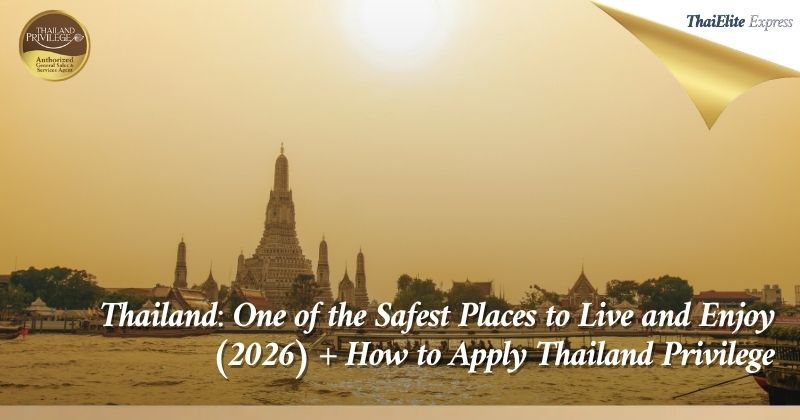
Thailand: One of the Safest Places to Live and Enjoy (2026) + How to Apply Thailand Privilege

Relocation decisions are rarely only about lifestyle. For many people in 2026, especially those watching global geopolitical uncertainty, including the Iran–US situation, “safe” also means predictable, practical, and easy to manage day to day.

Relocation decisions are rarely only about lifestyle. For many people in 2026, especially those watching global geopolitical uncertainty, including the Iran–US situation, “safe” also means predictable, practical, easy to manage day to day.

This guide breaks down what safety in Thailand looks like in real life (including the risks you should take seriously), and then explains how long‑stay residency through the Thailand Privilege Card (formerly Thailand Elite) can reduce the administrative stress of frequent renewals, plus how to Apply Thailand Privilege with support from ThaiElite Express.

What “safe” means for expats in Thailand

When people say Thailand is safe, they usually don’t mean “zero risk.” They mean:

  • Comfortable day-to-day living in most neighborhoods and cities
  • Low friction for daily routines (housing, transport, food, services)
  • Manageable crime exposure if you use normal precautions
  • Good private healthcare access in major areas
  • Predictable residency planning (knowing you can stay legally without constant visa runs)

In this article, we’ll cover safety in these practical dimensions:

  • Personal security (violent vs petty crime)
  • Scams and how to avoid them
  • Road and transport safety (often the biggest real-world risk)
  • Planning stability during global uncertainty
  • How long-stay status helps you feel secure, and how to apply

Day-to-day safety in Thailand (what most residents experience)

Violent crime vs petty crime

For most foreign residents, the bigger day-to-day concern is petty crime rather than serious violence, especially in high-traffic tourist areas and nightlife zones.

Common-sense habits go a long way:

  • Keep valuables secure in crowded areas
  • Avoid isolated places late at night when alone
  • Use hotel safes when available
  • Be careful with passport handling, carry a copy when appropriate and store the original securely

Official government travel advisories tend to focus on situational awareness (for example, avoiding protests and being mindful in specific areas). The UK’s Thailand travel advice also notes issues like bag snatching and recommends extra caution in certain regions.

Common scams to know (and how to protect yourself)

Thailand is highly visitable, but scams exist, particularly where there are many short-term visitors. Examples include:

  • Overpriced transport or “special” tour offers in tourist zones
  • Rental disputes (motorbikes/jet skis) where damage claims appear later
  • Fake or unofficial “visa agents” requesting payment upfront or holding documents

Relocation tip: when your residency is part of your safety plan, treat immigration services like you would banking, use reputable, verifiable providers and avoid anyone who can’t clearly explain the process, fees, and timelines.

Stability and distance from flashpoints: why Thailand is on relocation shortlists

When international tensions rise, such as the Iran–US situation, many people reassess where they want to base their family, business operations, or remote work. In these periods, Southeast Asia often appears on shortlists for a simple reason: distance from immediate pressure points, plus a long-standing expat ecosystem.

The most immediate ways global instability can affect relocation planning are often indirect:

  • Flight routings and schedules can change quickly
  • Travel insurance and risk policies may become more complex
  • People value destinations where they can secure clear, long-term stay permission without constant re-application

That last point is where residency planning becomes part of “safety.” Physical safety matters, but so does the feeling that your legal status is stable.

The visa reality check: staying long-term in Thailand without constant renewals

Many foreigners first arrive in Thailand on short-stay options. That can work for a while, but long-term living often creates friction:

  • Repeated extensions and paperwork
  • Uncertainty around rules changing
  • Time lost scheduling immigration visits
  • The stress of “What if I need to travel unexpectedly?”

For affluent travelers, retirees, families, and frequent business visitors, long-stay membership programs can be attractive because they reduce the “admin churn.”

That’s why many people looking to Apply Thai Elite (legacy term) are now actually looking for the Thailand Privilege Card under the current name.

Thailand Privilege Card (formerly Thailand Elite): what it is and who it fits

エリート Thailand Privilege Card (formerly known as タイランドエリート) is a long-stay residency membership program with packages that can provide multi-year stay permission and a menu of member services/benefits.

It can be a strong fit for:

  • Frequent visitors who want a stable long-term option
  • Retirees seeking fewer administrative headaches
  • Digital nomads who prefer a predictable base (without claiming it as a “digital nomad visa”)
  • Families who want a long-term lifestyle plan in Thailand
  • Business travelers who value streamlined arrival and support services

Membership packages vary by duration and benefits (including a points system on most tiers). The official Thailand Privilege site lists tiers such as Bronze, Gold, Platinum, Diamond, and Reserve, ranging from 5 to 20 years, with Reserve noted as invitation only.

How to Apply Thailand Privilege (step-by-step)

If your goal is to Apply Thailand Privilege, the process is straightforward when handled properly, and it’s much easier when you treat it as a documentation and compliance project rather than a “quick visa.”

Here’s a clear, practical pathway:

  1. Start with an eligibility check and consultation
    Confirm basic suitability and any issues that could affect background checks or processing.
  2. Choose the right membership tier (5–20 years)
    Pick based on your intended stay length, travel frequency, and benefit preferences.
  3. Prepare and submit your documents
    A clean submission (correct formats, consistent details, complete forms) reduces delays.
  4. Processing and background check
    Timelines vary depending on official processing and individual circumstances.
  5. Receive the approval notice
    This is the point where you should have clear confirmation before making major logistical decisions.
  6. Payment after approval (where applicable)
    Some authorized agents (including ThaiElite Express) operate with a pay-after-approval approach, which can reduce perceived financial risk during the review stage.
  7. Membership issuance and entry next steps
    After issuance, you’ll follow the official process for visa/entry setup and ongoing compliance (such as 90-day reporting rules where applicable).

If you’re searching phrases like Apply Thai Elite Visa or Apply Thailand Elite Visa, it typically refers to the same program under its former name, Thailand Privilege is the current branding.

How ThaiElite Express supports applicants (what we do, concretely)

ThaiElite Express provides authorized, step-by-step support for the Thailand Privilege application process, designed for clients who value speed, clarity, and correct submission.

Support typically includes:

  • Document checklist and pre-submission review
  • Application submission and follow-up
  • Clear explanations of timelines and next steps
  • Multi-language support for international clients
  • 24/7 contact availability for time-sensitive questions
  • A streamlined online workflow with complimentary consultation
  • . pay-after-approval policy structure (so you pay once approval is issued)

ThaiElite Express is an authorized General Sales & Services Agent (GSSA) and operates with established legal backing through its connection to Harvey Law Group Thailand.

Safety checklist for moving to Thailand (practical and actionable)

Use this as a relocation-ready checklist, especially if you’re planning to stay for years, not months.

Home & neighborhood

  • Choose areas with good lighting, walkability, and reliable building management
  • Confirm building security procedures and guest policies
  • If you’re new, start with a short lease before committing long-term

Transport

  • Decide early if you will ride motorbikes, if yes, invest in training and safety gear
  • Prefer reputable ride-hailing/taxi services
  • Avoid late-night driving in unfamiliar areas, especially in heavy rain

Insurance & healthcare

  • Maintain health insurance appropriate for long-term living
  • Identify a nearby hospital/clinic and learn how billing works
  • Keep digital copies of essential documents and emergency contacts

Legal and cultural awareness

  • Respect local laws and cultural norms (many “small misunderstandings” come from assuming rules match your home country)
  • Avoid protest sites and large gatherings that may escalate quickly

Residency planning

  • Don’t treat immigration as an afterthought
    If you want long-term stability, build your plan around legal stay certainty—this is where many people choose to Apply Thailand Privilege rather than relying on short-stay extensions.

FAQs

1) Is Thailand safe for expats in 2026?

For most expats, Thailand is widely experienced as comfortable and manageable day to day. The key is to treat safety as practical risk management: choose sensible neighborhoods, protect valuables in crowded areas, and take road safety seriously.

2) What are the most common safety issues foreigners face in Thailand?

Common issues include:

  • Road and motorbike accidents
  • Petty theft in crowded/tourist areas
  • Scams related to transport, rentals, and unofficial services

3) Does the Iran–US situation affect relocating to Thailand?

Generally, it’s more likely to affect travel logistics than daily life in Thailand—think flight reroutings, schedule disruptions, and insurance decisions. For many families and business travelers, this increases the value of having a stable long-stay base and flexible plans.

4) What is the difference between a Thailand Privilege Card and a regular visa?

Thailand Privilege is a membership-based long-stay program (formerly Thailand Elite) that provides long-term stay permission and member services. A regular visa is typically a standard immigration category with different requirements and renewal patterns.

5) How long does it take to get approved?

Processing time varies by case and official workload. Some applications are often reported as moving quickly, but it should never be treated as guaranteed. Plan with buffer time—especially if you’re coordinating housing, schools, or business travel.

6) Can families apply together?

Depending on the package and current promotions, families may be able to add members or apply in coordinated ways. Always confirm the latest official terms before relying on a promotion deadline.

7) Do I need to be in Thailand to apply?

No, you can start the process remotely and coordinate next steps once approved. The exact workflow depends on your location and entry plan. Most applicants obtain their visa at one of the three Elite selected airports on arrival from an international flight. It is also possible to retrieve your Elite visa at any Royal Thai Consulates overseas.

8) Is it safe to use an agent to apply? What should I check?

Yes—if the agent is authorized and transparent. Check:

  • Whether they are listed/recognized through official channels
  • Whether they clearly explain fees and timing
  • Whether they pressure you into paying before approval without clear safeguards

9) How do I apply for Thai Elite / Apply Thailand Elite Visa through ThaiElite Express?

These search terms typically refer to Thailand Privilege under its former name. You can begin with a consultation, choose a tier, submit documents through the online process, and proceed through the official review steps with guided support.

10) What happens after approval and payment?

After approval and payment (as required), you’ll receive membership issuance and follow the official steps for visa/entry setup, then maintain compliance during your stay (such as reporting requirements where applicable).

Conclusion: safety is also about predictability—Apply Thailand Privilege with a clear plan

Thailand’s appeal as a “safe place to live and enjoy” is rooted in everyday realities: an established expat ecosystem, comfortable city living, strong service infrastructure, and a lifestyle many people find easy to settle into. The biggest risks are also straightforward and manageable, especially road safety, scams, and staying compliant with local rules.

If your relocation plan is driven by stability, whether for family life, business travel, or a long-term base during global uncertainty, the next practical step is residency predictability. If you’re ready to Apply Thailand Privilege (or you’re searching for the legacy terms Apply Thai Elite, Apply Thai Elite Visa, or Apply Thailand Elite Visa), ThaiElite Express can guide you through the process with a streamlined, authorized approach.

Next step: Request a consultation via ThaiElite Express to confirm the latest requirements, choose the right tier, and submit correctly the first time.

有効期間5年~20年。
With a Privilege Entry Visa
that is valid from
5 years up to 20 years.

WhatsAppを通じて直接お問い合わせください。

この記事を共有する

今すぐ
メンバー

になる

よくある質問

タイのエリートビザの対象者は?
申請者/メンバーは、以下の資格を持つことが必要であり、かつ維持する必要があります:タイの出入国管理法または関連法に従ってタイに滞在することが許可されていること(過去にオーバーステイの記録がないこと)。外国のパスポートを所持していること。過失を犯した場合を除き、どの国でも判決によって懲役刑を宣告されていないこと。破産宣告を受けたことがないこと。精神的に無能力または準無能力者と宣告されていないこと。
エリートビザでタイにどれくらい滞在できますか?
タイエリートには、5年10年20年のメンバーシップがあります。 メンバーシップの有効期間中はビザの更新ができます。 メンバーはタイの入国審査を通過し有効期限が切れるまで、パスポートに1年間のビザスタンプが自動的に押されます。 メンバーが、1年以上連続して滞在する場合、入国管理局で簡単に更新でき、さらに1年間のビザスタンプが押されます。
タイエリートは信用できますか?
タイエリートビザは2003 年にタイ王国政府に承認されたプログラムです。エリート ビザプログラムを運営する タイプリビレッジカード株式会社はタイ観光省タイ政府観光局の完全子会社です。 HLG 法律事務所のサービスである ThaiElite-Express は、タイ政府認定の正規の販売代理店です。
タイエリートビザで働くことはできますか?
エリート会員となりタイエリートビザを取得すると非移民ビジネスビザを得て、タイで働くことを許可する就労許可証を申請することができます。 また、エリートフレキシブルプラスに申請し、タイの不動産、有限会社、株式会社、または証券取引所で100万米ドル以上を投資し、労働許可を得るオプションもあります。
タイエリートの入会金の支払い方法は?
申請書の提出、タイ政府による身元調査完了後、電子メールで承認書を受領し、支払いが発生します。 申請者は、国内または海外の銀行振込、クレジットカード、またはタイエリート銀行口座への直接入金による支払方法を選択します。
タイのエリートビザはデジタルノマドのためのものですか?
タイエリートビザは、デジタルノマドにとって完璧に適しています。ビジネスビザや退職ビザはデジタルノマドには必要ないため、エリートビザは数多くの特典を提供し、メンバーのニーズに応えることができます。必要な書類が非常に少なく、外国やタイ国内でもどこからでも申請できる柔軟性もあります。プロセスはスムーズで迅速です。また、The Instant Groupの調査によると、バンコクは最近、デジタルノマドとして働くための世界で2番目にベストな都市に選ばれています(アジアで最も優れた都市)。これは、バンコクが提供する無数の利点に起因するものであり、インターネットのブロードバンド速度、文化、景観、交通、天候、手頃な価格、料理などが含まれます。世界中からすでに3500万人のデジタルノマドを迎え入れたタイでは、2021年にも、技術革新やインフラの改善に伴い、さらに多くの人々が訪れることが予想されます。
タイで利用できる長期ビザは何がありますか?
タイエリートプログラムの申請は、長期間滞在し生活するための最短な解決策です。 タイエリートのみが5年、10年、20年のメンバーシップを提供し、申請者のメンバーシップ有効期間中にビザの更新を保証するものです。非移民ビザのオプションは、現在1年または2年の有効期間のもののみです。
タイのエリートのリタイアビザ
リタイアエリートビザは、申請時に選択するリスクの少ないオプションです。 申請時、エリートメンバーの場合、書類は最小限であり、ビザ有効期間中の医療保険や証明はありません。エリートメンバーは、90日間のレポートの支援、空港入国審査の迅速化、ラウンジ利用など、さまざまな特典を利用できます。 また、空港へのアクセスは空港リムジンを利用でき、現地通貨または外貨での銀行口座開設の支援、24時間年中無休のコールセンターなどのサービスを利用できます。エリートビザは、メンバーシップ期間中、特別なエントリービザを簡単に更新できるようにしています。
タイで利用できる長期ビザは何がありますか?
タイエリートプログラムの申請は、長期間滞在し生活するための最短な解決策です。 タイエリートのみが5年、10年、20年のメンバーシップを提供し、申請者のメンバーシップ有効期間中にビザの更新を保証するものです。非移民ビザのオプションは、現在1年または2年の有効期間のもののみです。
タイのエリートビザは合法ですか?
タイエリートビザは、タイに長期滞在するためのタイの法律に基づいた合法的なプログラムです。 タイエリートは、タイプリビレッジカード株式会社が運営しています。 同社は観光スポーツ省タイ国政府観光庁の完全子会社で、2003年にタイ王国政府に認証されています。

関連記事

Thailand Privilege Card Benefits (2026) Bronze vs Gold vs Diamond

Thailand Privilege Card Benefits (2026): Bronze vs Gold vs Diamond

3月 30, 2026

If you’re comparing Thailand Privilege Card membership tiers, the fastest way to narrow it down is simple: Bronze is the...

詳しくはこちら
Bangkok skyline at dusk

Thailand: One of the Safest Places to Live and Enjoy (2026) + How to Apply Thailand Privilege

3月 30, 2026

Relocation decisions are rarely only about lifestyle. For many people in 2026, especially those watching global geopolitical uncertainty, including the...

詳しくはこちら
Alternatives to the Thailand Privilege Card (2026)

Alternatives to the Thailand Privilege Card (2026): LTR, DTV, Retirement, and Business Visas Compared

3月 12, 2026

Compare LTR, DTV, retirement, and business visas as alternatives to the Thailand Privilege Card in 2026 : eligibility, where to...

詳しくはこちら

Our qualified team will contact you within today.

Thailand Privilege Card representative will contact you shortly with more information.

Our qualified team will contact you within today.

Thailand Privilege Card representative will contact you shortly with more information.