
Powered by HLG (Thailand)

Home - Privileges - 10 Best Countries for Tropical Residency in 2026

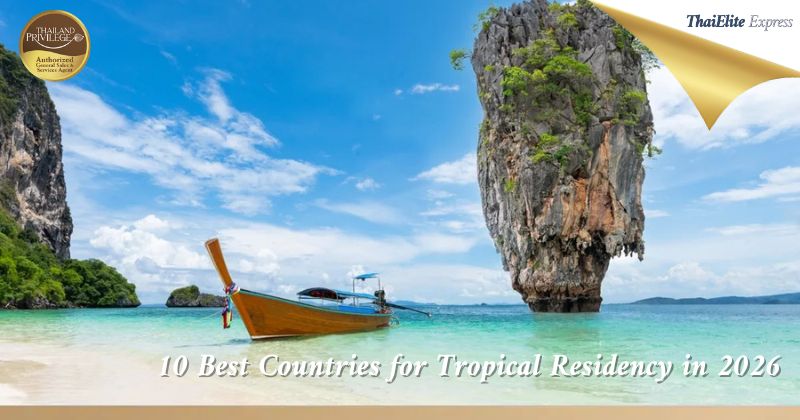
10 Best Countries for Tropical Residency in 2026

Discover the 10 best countries for tropical residency in 2026. Compare residency programs, healthcare, taxes, cost of living, and why Thailand stands out.

If tropical residency is on your 2026 plan—whether you’re retiring, working remotely, or designing a more flexible life—your best destination isn’t just about beaches and sunshine. It’s about long-term residency options, healthcare access, safety, tax realities, and how easily you can stay (and renew) without friction.

Below are the 10 best countries for tropical residency in 2026, ranked for warm-weather living with realistic pathways for US, UK, Canadian, and Australian citizens—plus remote workers and affluent movers.

Disclaimer: Visa rules and tax treatment change frequently. This article is informational and not legal or tax advice. Always confirm requirements with official government sources and qualified advisors.

How we ranked these tropical residency destinations (2026 criteria)

We compared each country across:

  • Climate & livability (including regional variation)
  • Cost of living (relative)
  • Healthcare (quality and expat practicality)
  • Safety (high-level; varies by region in every country)
  • Visa & residency pathways (clarity + longevity)
  • Taxation basics (territorial vs worldwide vs remittance-style rules)
  • Lifestyle (infrastructure, connectivity, community, mobility)

Tropical Residency in 2026: Top 10 countries compared (at a glance)

Country Climate profile (where expats live) Cost of living Healthcare (expat reality) Safety (high-level) Primary long-stay route Tax notes (high-level) Best for
Thailand Tropical; Bangkok/Phuket/Samui Low–Medium Strong private hospitals Medium Thailand Privilege (5–20 yrs) Foreign income remittance rules changed from 2024 All-round long-stay lifestyle
Malaysia Tropical; KL/Penang Low–Medium Strong private care Higher than many peers MM2H (5/15/20 yrs) Foreign-sourced income exemptions exist with conditions Families + value seekers
Portugal Not tropical; warm coastal hubs Medium EU-standard system Very high D7/D8 residency Worldwide for tax residents “Warm Europe” base
Panama Tropical Medium Private care; regional hub Medium Pensionado + Friendly Nations Territorial concept Retirees + tax simplicity seekers
Costa Rica Tropical; cooler Central Valley Medium Public + private options Medium–Higher Pensionado/Rentista + Digital Nomad Territorial framework Nature + US time zones
Indonesia (Bali) Tropical Medium Variable; major cities stronger Medium E33G remote worker / Second Home Tax residency rules matter Bali lifestyle + creatives
Philippines Tropical archipelago Low–Medium Best in major cities Medium SRRV Mixed, depends on status English-friendly retirement
Mauritius Tropical island Medium–High Smaller system; private options Higher than many peers Premium Visa / Occupation Permit Residency tests apply Island living + stability
Mexico Tropical coasts + temperate highlands Medium Strong private networks Region-dependent Temporary → Permanent residency Worldwide for tax residents North America proximity
UAE Desert (very hot summers) High Excellent private options High Remote Work (1 yr) / Golden Visa No personal income tax High-net-worth + mobility

1) Thailand (Best overall for long-term tropical residency)

Thailand remains one of the strongest choices to move abroad in 2026 for warm-weather living because it combines: excellent lifestyle value, deep expat infrastructure, strong private healthcare, and unusually clear long-stay solutions.

Residency pathways (highlight)

  • Thailand Privilege Membership (Thailand Privilege Card): a membership-based long-stay option commonly used by retirees, frequent travelers, and high-income remote workers who want multi-year stability.
    • Typical tiers commonly presented include 5, 10, 15, and 20-year options (fees vary by tier and can change).
  • Other routes (depending on profile): retirement visas, business/work permits, and other long-term visa categories.

Taxation (2026 reality, high-level)

Thailand’s approach to foreign income became more important from 2024 onward. If you’re in Thailand long-term, get professional advice on how tax residency and foreign income remittances apply to you.

Individuals with international assets, businesses, or multiple tax obligations should also consider cross-border tax and legal planning before relocating abroad.

Pros

  • Clear premium pathway for long stays (Thailand Privilege) without the constant renewals many countries require
  • Strong private healthcare ecosystem in Bangkok and major hubs
  • Excellent lifestyle variety: islands, cities, wellness, food, international airports
  • Great base for Asia travel
  • No mandatory declaration nor personal income tax on incomes earned and kept overseas
  • No tax residency if stay in Thailand does not exceed 183 days per year

Cons

  • Hot/humid seasons; some areas have seasonal air quality concerns
  • Tax planning matters more now than in prior years (get advice early)

Why Thailand ranks so highly for tropical residency: It’s one of the rare places where you can buy a multi-year residency lifestyle (via Thailand Privilege) and still enjoy a low-to-mid cost of living with big-city infrastructure.

Want Thailand as your base?
ThaiElite Express helps eligible foreigners establish long-term residency through Thailand Privilege Membership, with guided application support and a clear process. Start here: https://thaielite-express.com/


2) Malaysia (Best value + family-friendly tropical living)

Malaysia offers tropical weather, modern cities, and a strong cost-to-quality ratio—especially in Kuala Lumpur and Penang.

Residency pathways

  • Malaysia My Second Home (MM2H): a tiered long-stay program (commonly structured into Silver/Gold/Platinum tiers with different durations and financial requirements).
  • Regional variants and additional passes may exist depending on state and policy changes.

Taxation (high-level)

Malaysia’s treatment of foreign-sourced income can be favorable in certain cases, but it’s conditional—get specific advice based on your income sources and residency status.

Pros

  • Strong infrastructure and private healthcare
  • English widely used in business and expat settings
  • Great for families and long-term renting

Cons

  • Program requirements have changed more than once; always confirm the latest MM2H terms
  • Some long-stay routes involve substantial fixed deposits

3) Portugal (Best “warm weather residency” option in Europe)

Portugal is not a tropical country, but it’s included because it’s one of the most practical warm weather countries for expats who want Europe—especially in the Algarve and Madeira.

Residency pathways

  • D7 (often used by retirees / people with stable income)
  • D8 Digital Nomad (often used by remote workers)
  • Long-term outcomes can include permanent residency/citizenship routes over time (subject to rules and timelines).

Taxation (high-level)

Portugal generally taxes residents on worldwide income, and expat-friendly regimes depend on eligibility and timing.

Pros

  • Strong safety reputation
  • EU healthcare access and standards
  • Great for those who want a European base with mild winters

Cons

  • Not tropical; some regions can be cool and rainy in winter
  • Bureaucracy and processing times can be slow

4) Panama (Best for retirees who want territorial-style tax simplicity)

Panama is a classic pick among the best countries to retire abroad, combining tropical living with well-known retiree residency routes.

Residency pathways

  • Pensionado (retiree-focused)
  • Friendly Nations (for eligible nationalities with economic ties)

Taxation (high-level)

Panama is widely described as operating on a territorial concept of income, which can be attractive for certain foreign-income profiles (get professional sourcing advice).

Pros

  • Popular retiree ecosystem and services
  • Territorial tax concept is a major draw
  • Good connectivity via Panama City

Cons

  • Hot/humid climate in many regions
  • Paperwork and documentation standards can be strict

5) Costa Rica (Best for nature + US time zones)

Costa Rica is ideal if your vision of tropical residency is nature, outdoor living, and a slower pace—without leaving North American time zones.

Residency pathways

  • Pensionado (retirement income pathway)
  • Rentista (income-based residency)
  • Digital Nomad category exists for qualifying remote workers

Taxation (high-level)

Costa Rica is often discussed within a territorial-style framework, but real outcomes depend on your status and sourcing.

Pros

  • Strong lifestyle appeal (beaches, rainforests, wellness)
  • Time zone alignment with the US/Canada
  • Good private healthcare options alongside a public system

Cons

  • Popular expat regions can be pricier than expected
  • Residency processing can take time

6) Indonesia (Bali) (Best for Bali lifestyle + remote worker energy)

Bali is a global magnet for remote workers and creatives. Indonesia now has clearer visa structures than in prior years, though compliance matters.

Residency pathways

  • Remote worker visa category (E33G) (designed for offshore employment/clients)
  • Second Home visas (longer-horizon residency frameworks)
  • Golden Visa (investment-focused, higher thresholds)

Taxation (high-level)

Indonesia’s tax residency rules can trigger worldwide taxation depending on circumstances. Don’t assume “digital nomad = no tax.”

Pros

  • Bali lifestyle and community density is hard to beat
  • Many housing choices from budget to luxury
  • Strong wellness/hospitality ecosystem

Cons

  • Healthcare depth varies (serious cases often handled in larger hubs/nearby countries)
  • Visa compliance is important; don’t use the wrong stay type for remote work
  • Legal and tax framework tend to change regularly
  • Infrastructure issues

7) Philippines (Best for English-speaking retirement in the tropics)

The Philippines offers tropical living with a strong English advantage for many Western retirees.

Residency pathways

  • SRRV (Special Resident Retiree’s Visa) through the Philippine Retirement Authority (program terms and categories can change—verify current SRRV options before planning).

Pros

  • English is widely used
  • Low-to-mid cost of living (depending on area)
  • Strong island lifestyle variety

Cons

  • Healthcare quality varies significantly outside major cities
  • Infrastructure can be inconsistent depending on location
  • Safety issues

8) Mauritius (Best for premium island living + stability)

Mauritius is a more “boutique” tropical residency option—often favored by affluent movers who want an island base with a reputation for stability.

Residency pathways

  • Premium Visa (long-stay visitor/remote work-oriented, typically renewable)
  • Occupation Permit routes (work/residence categories such as professional, self-employed, investor)
  • Property-linked residence routes under approved schemes (requirements apply)

Pros

  • Beautiful island lifestyle with strong privacy
  • Good positioning between Europe, Africa, and Asia time zones
  • Multiple ways to structure longer stays

Cons

  • Smaller healthcare system; some people plan for medical travel for complex needs
  • Cost can be higher than Southeast Asia

9) Mexico (Best for proximity to the US/Canada + lifestyle variety)

Mexico gives you a rare mix: true tropical coasts and temperate highland cities—often at a lower cost than comparable US destinations.

Residency pathways

  • Temporary Resident Visa (often based on economic solvency)
  • Permanent Resident options (varies by consulate and profile)
  • Important: financial thresholds can vary by consulate and exchange rates.

Taxation (high-level)

Mexico tax residency can involve “center of vital interests” concepts and worldwide reporting obligations for residents—get cross-border advice.

Pros

  • Proximity to North America (easy flights, same-ish time zones)
  • Strong private healthcare networks in major cities
  • Excellent food and culture, huge regional variety

Cons

  • Safety is highly region-specific—research your exact city
  • Bureaucracy varies by state/consulate

10) UAE (Best for high-net-worth expats and global mobility)

The UAE (Dubai/Abu Dhabi) isn’t tropical—it’s desert—but it’s a top “warm weather” option in 2026 due to safety, infrastructure, and favorable personal tax positioning.

Residency pathways

  • Remote Work visas (typically 1-year renewable frameworks)
  • Golden Visa (longer-term residency for eligible categories)

Taxation (high-level)

The UAE is known for no federal personal income tax, though corporate/business activity can be taxed under corporate tax rules.

Pros

  • High safety perception and excellent infrastructure
  • Strong healthcare options
  • Global travel hub for business and lifestyle
  • No personal income tax

Cons

  • High cost of living
  • Extremely hot summers limit outdoor life for part of the year

Thailand Privilege Membership: a premium tropical residency pathway (quick overview)

For many people comparing long-term residency options, Thailand stands out because Thailand Privilege is structured as a multi-year membership tied to residency privileges—often chosen by:

  • Retirees who want stability without frequent renewals
  • Remote workers with offshore income who want a comfortable base
  • Frequent business travelers who value smoother arrivals and long-stay flexibility

How ThaiElite Express helps:
As a Thailand Privilege-focused residency service, ThaiElite Express helps you choose the right membership tier, prepare documentation, and follow the correct process—so you can settle in Thailand faster and with fewer errors.

Explore options: https://thaielite-express.com/

How to choose the best tropical residency destination for you (simple framework)

  • If you want the cleanest long-stay structure: Thailand (Thailand Privilege), Malaysia (MM2H) and UAE
  • If you want territorial-style tax simplicity: Panama (and often Costa Rica, depending on circumstances)
  • If you want Europe with warm weather: Portugal (coastal hubs)
  • If you want island life: Thailand islands, Philippines, Mauritius, Bali
  • If you want proximity to the US/Canada: Mexico, Costa Rica, Panama

FAQ: Tropical Residency in 2026

1) What is tropical residency?

A lifestyle-driven relocation to a warm-weather country where you can legally stay long-term—through a visa, residence permit, or structured program—often paired with healthcare access and stable renewals.

2) What are the best tropical countries to retire abroad in 2026?

Common top choices include Thailand, Panama, Costa Rica, Malaysia, and the Philippines, depending on your budget, healthcare needs, and how long you want residency for.

3) What are the best warm weather countries for expats who work remotely?

Often: Thailand, Malaysia, Portugal (for Europe), Costa Rica, UAE, and Indonesia (Bali)—but the “best” depends on whether you need a remote-work visa and your tax exposure.

4) Which country has the simplest long-term residency option?

It depends on your profile. For “set-and-stay” multi-year simplicity, Thailand Privilege is frequently shortlisted because it offers multi-year durations without annual re-qualification.

5) Do I pay taxes in the country where I live abroad?

Possibly. Tax residency is usually triggered by time spent and/or your “center of vital interests.” Rules differ widely. Always get advice—especially if you have foreign income, investments, or business activity.

6) Is Thailand a good place to live long-term in 2026?

Yes for many expats—Thailand pairs tropical lifestyle with strong private healthcare, excellent amenities, and clear long-stay options like Thailand Privilege.

7) What is Thailand Privilege Membership?

A government-run membership program (Thailand Privilege Card) that grants long-stay residency privileges in Thailand for multi-year terms (tier-dependent), commonly used by retirees and long-stay expats.

8) Can I include my family on long-stay programs?

Some programs allow dependents (rules vary). Malaysia’s MM2H, several Portugal routes, and many investment or work-linked schemes can include family—usually with extra documentation and fees.

9) How do I apply for Thailand Privilege with ThaiElite Express?

Start by requesting a consultation via https://thaielite-express.com/. You’ll typically choose a tier, prepare documents, and proceed through the official background check and approval steps.

Final takeaway

In 2026, the “best” tropical residency isn’t just where the weather is warm—it’s where the residency pathway is durable and your day-to-day life (healthcare, safety, infrastructure) matches your goals.

If Thailand is on your shortlist and you want a premium long-stay option, explore Thailand Privilege Membership with ThaiElite Express:
https://thaielite-express.com/


Stay in Thailand long-term.
With a Privilege Entry Visa
that is valid from
5 years up to 20 years.

Contact us directly via WhatsApp

Share this article

Become an
Elite Member

NOW

Frequently asked questions

Who is eligible for Thai elite visa?
The applicant/the Member must have and maintain to have the following qualifications: Being allowed to stay in Thailand in accordance with the immigration laws or any related law of Thailand.(no overstay record) Holding foreign passport. Not having been sentenced by a judgment to imprisonment in any countries except for an offense committed through negligence. Not having been adjudicated bankrupt. Not having been declared as a person of unsound mind incompetence, or quasi incompetent.
How long can I stay in Thailand with Elite Visa?
Thailand Elite offer a 5,10 or 20 years membership and ensure the renewal of your visa during the validity of the membership. Each time a member goes through the Thai immigration, he/she will automatically get a one-year visa stamp in his/her passport until expiration of the membership. If the member happens to stay for more than 1-year consecutively in Thailand, then a simple renewal at the immigration office will grant another 1-year visa stamp.
Is Thailand Elite a scam?
The Thailand Elite Visa is a program initiated and approved by the Royal Thai government in 2003. The Thailand Privilege Card Co., Ltd, which runs the Elite Visa program is a fully owned subsidiary of the Tourism Authority of Thailand, under the Ministry of Tourism and Sport. ThaiElite-Express empowered by HLG Law Firm is an authorized sale agent.
Can I work with Thailand Elite?
After becoming an Elite member and obtaining your Thailand Elite Visa, you can apply anytime to a non-immigrant business visa and a work permit allowing you to work in Thailand. You also have the option of applying to the Elite Flexible Plus, invest at least 1 million USD in Thailand either in real estate, a limited or public company, or in stock exchange, and be granted a work permit.
How do I pay for Thailand Elite?
The payment is required only after submission of your application, the immigration background check by the Thai immigration, and receipt of the Approval Letter by email. Applicants could then choose to proceed to their membership fee by local or overseas bank transfer, credit card or depositing money to Thailand Elite bank account directly.
Is the Thailand Elite visa for Digital Nomads?
The Thailand Elite Visa is perfectly suitable for Digital Nomads. As business or retirement visas are not necessary a good match for digital nomads, the Elite Visa answers to all nomads with numerous privileges to cater members’ needs. With very little documentation needed, as well as the flexibility of applying from anywhere, regardless abroad, on arrival, or within Thailand. The process is seamless and fast. Moreover, from a study by The Instant Group, Bangkok has recently been voted as the world’s second-best city to work in as a digital nomad (best city in Asia). This is down to the innumerable benefits in which Bangkok brings, which are but not limited to; Internet broadband speed, culture, scenery, transportation, weather, affordability, cuisine, and more. Having already welcomed 35 million digital nomads from all over the world, in 2021, it’s forecasted that there would be more arrivals to the Land of Smiles with constant technological and infrastructure improvements.
What is the long term visa available in Thailand?
Applying to a Thailand Elite program is a viable and easy solution to stay and live for a long period of time in Thailand. Only Thailand Elite can offer a 5,10 or 20 years membership and ensure the renewal of the visa during the validity of the applicant membership. As of today, all other non-immigrant visa options are limited to a validity period of 1 or 2 years.
Thailand elite vs Retirement Visa
To retire in Thailand, the Elite Visa is a worry-free option compared to the Retirement Visa from the application, during holding period to the renewable. At the application time, for an Elite, the documentation is minimal, and no medical insurance nor proof of funds is required for instance. During the holding period, Elite members enjoy numerous privileges such as an assistance for their 90 days report, a fast track at the airport immigration, the lounge access and airport limousine, assistance in opening a bank account in local or foreign currency, a 24/7 call center and much more. The Elite Visa offers you an easy renewable of the Privilege Entry Visa for the duration of your membership.
What is the long term visa available in Thailand?
Applying to a Thailand Elite program is a viable and easy solution to stay and live for a long period of time in Thailand. Only Thailand Elite can offer a 5,10 or 20 years membership and ensure the renewal of the visa during the validity of the applicant membership. As of today, all other non-immigrant visa options are limited to a validity period of 1 or 2 years.
Is the Thailand Elite Visa legit?
The Thailand Elite Visa is a legal and legit program under Thai law to stay long-term in Thailand. The “Thailand Elite” is operated by Thailand Privilege Card Co., Ltd. It has been initiated in 2003 by the Royal Thai Government itself. The company is fully owned subsidiary of the Tourism Authority of Thailand, under the Ministry of Tourism and Sport.

Related Articles

Why Wealthy Americans Choose Tropical Residency in 2026

July 19, 2026

Tropical residency is becoming the preferred lifestyle strategy for affluent Americans seeking better healthcare, greater flexibility, and long-term residency certainty...

Read More

Thailand DTV Visa vs Thailand Privilege Membership (2026)

July 19, 2026

Compare Thailand DTV Visa vs Thailand Privilege Membership in 2026. Learn the differences in costs, eligibility, benefits, stay periods, and...

Read More

Thailand Visa Types (2026): Compare Long-Stay Options

July 19, 2026

Compare Thailand visa types in 2026, including Tourist, DTV, Retirement, Business, Marriage, Education, and Thailand Privilege Membership to find the...

Read More

Our qualified team will contact you within today.

Thailand Privilege Card representative will contact you shortly with more information.

Our qualified team will contact you within today.

Thailand Privilege Card representative will contact you shortly with more information.