
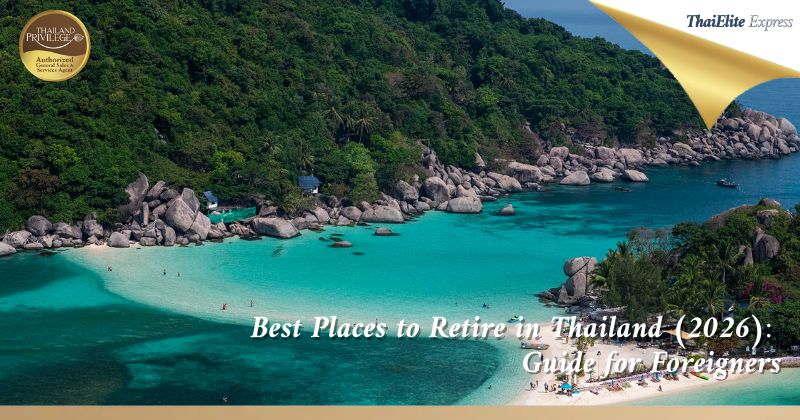
Choosing where to retire in Thailand is less about finding one “perfect” city and more about matching your priorities—healthcare access, day-to-day comfort, budget, and lifestyle pace—to the right destination. This 2026 guide compares six of the most popular retirement bases for foreigners: Bangkok, Hua Hin, Phuket, Chiang Mai, Pattaya, and Koh Samui. You’ll also get realistic monthly cost ranges, visa options for retirees, and a clear comparison of the Thailand retirement visa route vs the Thailand Privilege Membership—so you can plan a long stay with fewer surprises.
Retirees from the US, UK, Canada, Australia, and Europe continue to choose Thailand for a mix of practical and lifestyle reasons:
To keep this guide useful (and fair), every city is evaluated on the same retiree-focused criteria:
Important note on costs: Rent is the biggest variable in every destination. For rent benchmarks, we referenced 2026 city data from Numbeo, including typical 1-bedroom city-center rents such as Bangkok (~THB 22,230), Chiang Mai (~THB 16,427), Hua Hin (~THB 19,150), Pattaya (~THB 17,470), Phuket (~THB 23,520), and Koh Samui (~THB 27,567).
(See: Bangkok, Chiang Mai, Hua Hin, Pattaya, Phuket, Koh Samui cost pages on Numbeo: https://www.numbeo.com/cost-of-living/)
The monthly cost ranges below are realistic planning estimates for one person, including housing and daily life (but excluding international flights).
| City | Best for | Typical monthly cost (THB) | Healthcare | Transport | Expat community |
| Bangkok | Top specialists + big-city convenience | 60,000–110,000 | Best depth | BTS/MRT + taxis | Very large |
| Hua Hin | Calm beach-town routine | 50,000–85,000 | Strong locally + Bangkok backup | Car helpful | Established retiree scene |
| Phuket | Island living + major amenities | 65,000–120,000 | Strong private options | Driving common | Very international |
| Chiang Mai | Culture + value + nature | 45,000–75,000 | Strong city options | Grab/songthaew | Strong and social |
| Pattaya | Value + close to Bangkok | 45,000–80,000 | Strong private options | Easy local transport | Long-established |
| Koh Samui | Slower island pace | 70,000–130,000 | Good locally; referrals for complex care | Island logistics | Smaller, active |
Bangkok is ideal if you want maximum convenience: the widest choice of hospitals and specialists, international food and shopping, and easy domestic/international travel.
Bangkok is Thailand’s deepest healthcare market. As an example of internationally recognized standards, Bangkok Hospital’s site notes JCI accreditation for Bangkok Hospital Headquarters for the period 18 Feb 2023–17 Feb 2026:
https://www.bangkokhospital.com/en/bangkok-bone-brain/about-us/awards-accreditations/joint-commission-international-gold-seal-of-approval
This doesn’t mean every hospital is the same—but it does show why many retirees prioritize Bangkok when ongoing medical care is a key concern.
Bangkok is generally comfortable for retirees who choose neighborhoods carefully. The biggest day-to-day risk for many expats is traffic—especially crossing roads or relying on scooters.
If you want to live without driving, Bangkok is the easiest choice on this list. BTS/MRT plus taxis and ride-hailing can cover most needs.
Bangkok offers world-class shopping malls, international groceries, parks, events, and short escapes (beaches, countryside) when you need a break from city energy.
Rent benchmark: Numbeo shows 1BR city-centre rent ~THB 22,230 (updated June 2026):
https://www.numbeo.com/cost-of-living/in/Bangkok
Watch-outs
Hua Hin is popular with long-stay retirees who want a slower pace by the sea, golf and cafes, and a supportive retiree community—without the intensity (or traffic) of Bangkok.
Hua Hin has reputable private-care options, and Bangkok is close enough for specialist appointments. Bangkok Hospital Hua Hin’s site states it received JCI accreditation effective 1 March 2024:
https://www.bangkokhospital.com/en/huahin/about-us/awards-accreditations/joint-commission-international-jci-bhh
Generally calm and residential. As always, focus on neighborhood lighting, sidewalks, and proximity to essentials.
Hua Hin can be walkable in certain pockets, but many retirees find a car useful—especially if you want easy trips around the coast or inland.
Beach walks, markets, golf, a steady social rhythm, and Bangkok access when you want concerts, major shopping, or international flights.
Rent benchmark: Numbeo shows 1BR city-centre rent ~THB 19,150 (updated June 2026):
https://www.numbeo.com/cost-of-living/in/Hua-Hin
Watch-outs
Phuket fits retirees who want beach + international community plus the convenience of a major airport, international restaurants, and a wide range of housing.
Phuket’s private healthcare is one reason it works for long-stay foreigners. Bangkok Hospital Phuket describes itself as Phuket’s first hospital to receive JCI accreditation and notes hospital scale and specialized centers:
https://www.bangkokhospital.com/en/phuket/visit/facilities-bpk
The main practical safety topic is road safety, especially in wet conditions. If you’re not comfortable riding scooters, plan for Grab/taxis or choose walkable areas.
Driving is common. Location selection can reduce how often you need to commute across the island (which affects comfort and budget).
Beaches, marinas, dining, expat meetups, and activities that range from quiet wellness routines to busy social scenes.
Rent benchmark: Numbeo shows 1BR city-centre rent ~THB 23,520 (updated June 2026):
https://www.numbeo.com/cost-of-living/in/Phuket
Watch-outs
Chiang Mai is ideal if you want a smaller city with great food, strong community life, and access to nature—often at lower rent levels than Bangkok or the islands.
Chiang Mai has multiple private hospitals and large public hospitals, and many retirees find it sufficient for ongoing care. For complex cases, Bangkok is the usual referral hub.
Generally calm and easy to navigate. The biggest lifestyle consideration is seasonal haze/air quality during parts of the dry season—some retirees simply travel during those weeks.
You’ll likely use Grab, songthaews, or a car (no BTS/MRT). Choose a neighborhood where groceries, cafes, and healthcare are close.
Temples, cafes, markets, mountains, day trips, and a strong network of expat clubs and activities.
Rent benchmark: Numbeo shows 1BR city-centre rent ~THB 16,427 (updated June 2026):
https://www.numbeo.com/cost-of-living/in/Chiang-Mai
Watch-outs
Pattaya can be a practical option if you want lower housing costs than Bangkok, an established expat community, and easy access to Bangkok.
Pattaya has multiple private hospitals used by expats. Bangkok Hospital Pattaya’s official site provides an overview and lists awards/accreditations:
https://www.bangkokhospital.com/en/pattaya
Pattaya’s reputation depends heavily on which area you choose. Many retirees live in calmer neighborhoods and enjoy a comfortable routine. Aim for good lighting, quieter streets, and easy access to essentials.
Local transport is simple and Bangkok is accessible by road. If you plan frequent trips, Pattaya’s location can be a real advantage.
You can shape Pattaya into different lifestyles: quiet seaside routine, social clubs, dining scene, or frequent Bangkok weekends.
Rent benchmark: Numbeo shows 1BR city-centre rent ~THB 17,470 (updated May 2026):
https://www.numbeo.com/cost-of-living/in/Pattaya
Watch-outs
Koh Samui is a strong fit if you want a slower, wellness-oriented island pace and you’re happy to plan around island logistics.
Samui has private care options including Bangkok Hospital Samui. A Thailand PM Award directory entry for Bangkok Hospital Samui notes it is a JCI accredited hospital (listed as JCI accredited in 2012):
https://pmaward.ditp.go.th/winner-directory/bangkok-hospital-samui/
For complex specialist care, some retirees plan ahead for referrals to Bangkok.
Island roads can be challenging—especially in the rain. Many retirees either avoid scooters or use drivers/taxis when needed.
Samui connectivity is via flights and ferries. Bangkok Airways describes Samui Airport as privately owned and operated (helpful context for flight pricing):
https://investor.bangkokair.com/en/our-business/airport-business
Beach routines, fitness, cafes, and a quieter rhythm—especially outside the busiest tourist pockets.
Rent benchmark: Numbeo shows 1BR city-centre rent ~THB 27,567 (updated May 2026):
https://www.numbeo.com/cost-of-living/in/Koh-Samui
Watch-outs
Most retirees choose one of two practical pathways:
Because rules can change and interpretation can vary by office, treat every visa plan as a project: confirm the current requirements and prepare documents carefully.
Thailand’s official retirement visa guidance references these financial thresholds:
Source (Thailand government retirement visa information):
https://thailand.go.th/useful-information-detail/010_002
For the Non-Immigrant O-A route, official guidance also references health insurance evidence, including a sum insured not less than 3,000,000 THB.
Source (Thailand government insurance requirement explanation):
https://thailand.go.th/public/visit-thailand-detail/010_005
Long-stay foreigners often need to do 90-day address reporting. A Royal Thai Consulate page outlines the requirement and cites a 2,000 THB fine if you fail to report (plus additional daily fine not exceeding 200 THB/day until complied).
Source:
https://thaiconsulatela.thaiembassy.org/en/publicservice/foreigners-staying-in-thailand-more-than-90-days
Thailand Privilege’s official website lists these membership tiers and headline fees:
Source (Thailand Privilege official site):
https://www.thailandprivilege.co.th/th/home
An official Thailand Privilege Card Co., Ltd. membership package PDF also confirms pricing/validity for Gold/Platinum/Diamond and references support services and benefits categories:
https://prd-salc.thailandprivilege.co.th/production/membership/document/1716213709097602986.pdf
Many retirees consider Thailand Privilege Membership because it can offer a more predictable long-stay framework with fewer recurring renewals than traditional annual extensions—especially attractive if you:
| Topic | Thailand retirement visa route | Thailand Privilege Membership |
| Eligibility | Age 50+ and financial evidence (official thresholds commonly referenced: 800,000 THB deposit or 65,000 THB/month income) | Membership-based; tier fees per official program listings |
| Ongoing admin | Often yearly extensions + routine compliance | Often chosen for long-term convenience and predictability |
| Upfront vs ongoing costs | Lower upfront; ongoing renewals/requirements | Higher upfront; multi-year planning (5–20 years) |
| Best fit | Budget-focused retirees comfortable with paperwork | Retirees prioritizing simplicity, flexibility, and long-term structure |
ThaiElite Express helps retirees and long-stay foreigners understand and apply for the Thailand Privilege Membership with clear, practical guidance—so you can focus on choosing the right city and settling in.
If you’re deciding between a traditional retirement path and a Privilege-based stay, start here:
From there, you can request a consultation and get guidance on:
Before signing a long lease, check if you can reach these within 15 minutes:
A 1–3 month trial stay helps you test:
Even if Thailand is affordable overall, private healthcare can become expensive without insurance. Build a monthly buffer and plan your coverage intentionally.
If you’re not comfortable on scooters:
Bangkok is the strongest overall for specialist depth and hospital choice. If you prefer a quieter base, Hua Hin or Pattaya can work well with Bangkok as a backup for complex care.
Many retirees plan around 50,000–120,000 THB/month depending on rent, insurance, and lifestyle. Islands like Phuketand Koh Samui often have higher cost swings, mainly due to housing.
Many retirees feel comfortable in Thailand, especially in established expat neighborhoods. The most important safety focus is often traffic and road safety, plus normal precautions in tourist-heavy areas.
Thailand government guidance references financial evidence such as 800,000 THB in funds or 65,000 THB/monthincome/pension (or a combination meeting the threshold).
Source: https://thailand.go.th/useful-information-detail/010_002
For the Non-Immigrant O-A retirement route, Thai government guidance references health insurance evidence, including coverage not less than 3,000,000 THB sum insured.
Source: https://thailand.go.th/public/visit-thailand-detail/010_005
It’s a membership-based long-stay program with official tiers (Bronze, Gold, Platinum, Diamond, Reserve) and multi-year validity.
Source: https://www.thailandprivilege.co.th/th/home
For many retirees, Thailand Privilege Membership feels easier long term because it can reduce renewal friction and supports longer-term planning (5–20 years). Retirement visas can be more economical but usually require more ongoing admin and documentation.
Many foreigners staying long term must report their address every 90 days. A Royal Thai Consulate page explains the rule and penalties (including a 2,000 THB fine for not reporting).
Source: https://thaiconsulatela.thaiembassy.org/en/publicservice/foreigners-staying-in-thailand-more-than-90-days
Many foreigners buy condos (subject to Thai regulations and building quota rules). Because property law is detail-sensitive, it’s wise to get professional advice before purchasing.
Visit https://thaielite-express.com/ and request a consultation. We’ll help you understand whether Thailand Privilege Membership fits your retirement timeline, travel habits, and comfort with ongoing immigration administration.
The Thailand Privilege Card offers eligible foreign nationals a membership-based option for enjoying extended stays in Thailand, along with additional...
Read MoreIf you are considering a Thailand Privilege membership, one question can affect the value of the decision: is the membership...
Read MoreFor foreigners planning to spend many years in Thailand, the choice between Thailand Privilege or permanent residency is not simply...
Read MoreThai Elite Express is operated by HLG (Thailand) Co., Ltd., a duly licensed General Sales Agent of the Thai Elite program and Thailand Privilege Card Co., Ltd. since 2013.